
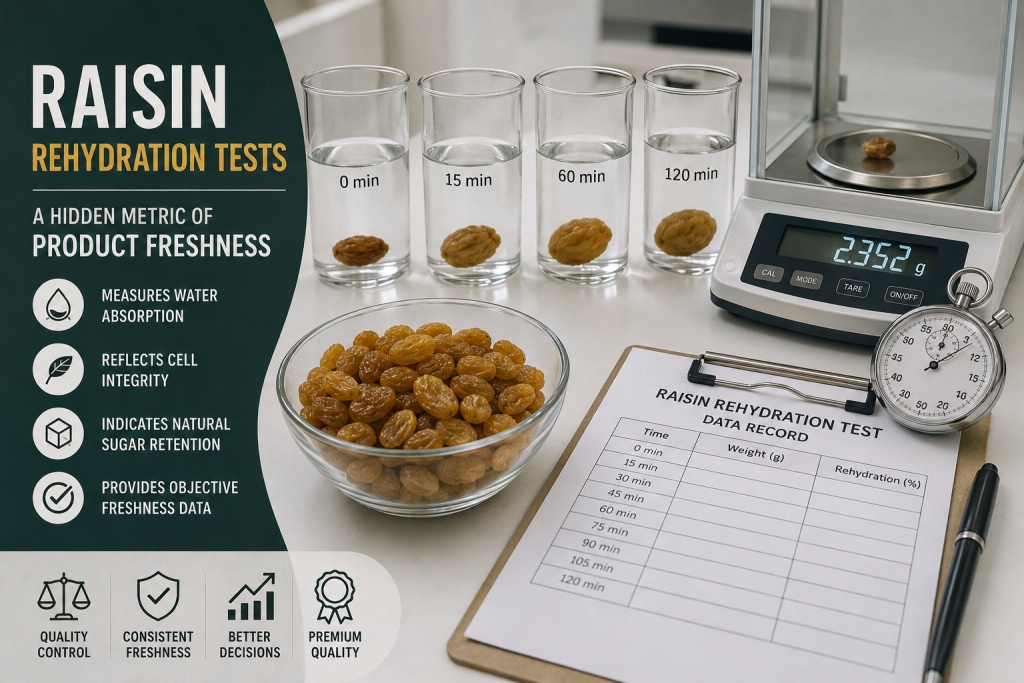
Freshness is the single most important quality attribute for premium golden raisin buyers.
- Why it matters: Even a few days of improper storage can make raisins dry, brittle, and less flavorful.
- The solution: The Raisin Rehydration Test offers an objective, repeatable way to gauge how well a raisin can regain moisture—an exact proxy for its freshness.
Raisin Rehydration Test
A Raisin Rehydration Test measures the percentage of water a dried raisin absorbs when immersed in a controlled environment. The higher the absorption, the fresher the raisin.
How the Test Reflects Freshness
- Cellular integrity allows water to penetrate quickly.
- Natural sugar content supports moisture retention.
- Moisture memory ensures raisins stay plump after dehydration.
Setting Up a Reliable Rehydration Test Protocol
Equipment Checklist
- Analytical balance (±0.01 g)
- Temperature‑controlled water bath or calibrated thermometer
- 50 mL graduated cylinders
- Stopwatch or timer
Interpreting Rehydration Rates
Higher percentages reflect better cellular integrity and natural sugar retention, translating into superior texture and flavor.
Key Factors that Influence Rehydration
Comparing Batches: Why It Matters
Running the Raisin Rehydration Test across multiple supplier lots lets buyers:
- Identify the most consistent, freshest suppliers.
- Quantify lot‑to‑lot variation and adjust purchase volumes.
- Provide objective data for premium pricing negotiations.
Integrating Rehydration Testing into Quality Assurance
Combine the test with moisture content analysis and sensory panels for a comprehensive quality picture.
Best Practices for Optimal Freshness
- Standardize Sampling – Consistent number and type of raisins.
- Control Temperature – Keep water at 20 °C ± 1 °C.
- Use Replicates – Triplicates reduce measurement variability.
- Maintain Detailed Records – Log dates, temperatures, and results.
- Communicate Results – Share data with suppliers to drive continuous improvement.
Conclusion – The Value of the Raisin Rehydration Test
The Raisin Rehydration Test is a quick, objective, and repeatable method to assess the freshness of golden raisins. When paired with other quality tools, it equips premium buyers with the data needed to make informed purchasing decisions, reduce waste, and maintain customer satisfaction.
FAQ
Can the test replace visual inspection?
It complements visual checks, offering objective data that sight alone cannot provide.
How often should the test be performed?
At least once per shipment and periodically during storage (e.g., quarterly).
Is it suitable for other raisin varieties?
Yes, the methodology works for all raisin types with minor adjustments.
This is an interesting way to compare raisin batches. Do you normally recommend using the rehydration test together with moisture analysis, or can rehydration percentage be used as the main freshness indicator?
It is better to use rehydration testing together with moisture analysis and sensory inspection. Rehydration can provide useful comparative data, but it should not replace a complete quality assessment.