

What Are Yellow Raisins and Why They Matter in Global Trade
Why do yellow raisins stand out in global dried fruit trade despite being made from the same grapes as many dark raisins? The answer lies in the specific drying process that transforms their colour, taste and texture.
This article gives you a complete explanation of how yellow raisins are produced, what they taste like, the benefits they offer and how export markets value them. The goal is simple. You gain clear, practical insight to support better sourcing and market decisions.
The Taste Profile That Sets Yellow Raisins Apart
Mild, balanced sweetness
Yellow raisins offer a gentle sweetness that does not overpower other ingredients, making them ideal for formulated food products such as those using Sultana light Raisin in blended recipes.
Soft and tender bite
Their texture remains soft after processing, which improves mouthfeel in baked goods, cereals, and snack applications, especially when compared to firmer options like Sun Dried Raisin.
Light, fruity flavour notes
The controlled drying process preserves natural grape flavours, resulting in a cleaner and lighter taste compared to darker varieties such as Jumbo Raisin.
No caramelised aftertaste
Unlike sun-dried varieties, yellow raisins retain fresh fruit notes rather than developing heavy caramel flavours often found in traditional raisin types discussed in Raisins vs Sultanas.
Bright golden colour appeal
Their golden appearance enhances visual contrast and supports a premium look in bakery items and snack mixes, similar to the visual advantage of Long Golden Raisin & Golden Raisin.
High suitability for industrial use
Food manufacturers prefer yellow raisins where consistent flavour, softness, and appearance are critical, especially alongside elongated varieties such as Green Long Raisin.
How Yellow Raisins Are Produced: Drying and Pre-Treatment Process
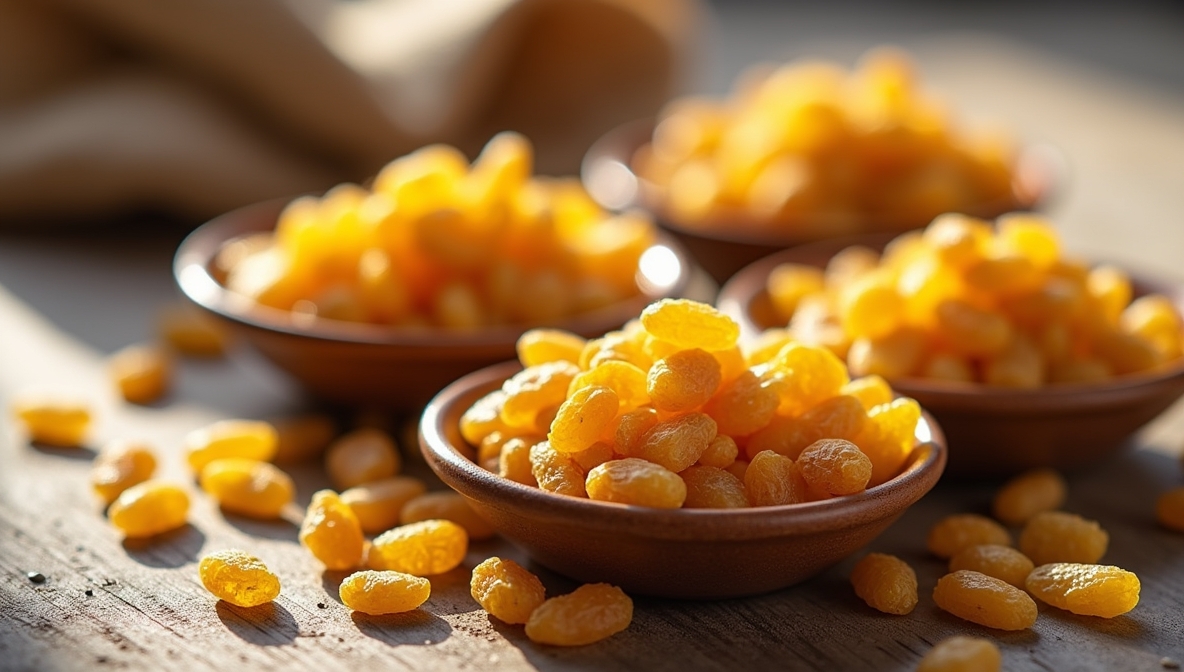
The key difference between yellow and dark raisins is the drying technique. Yellow raisins are typically pre treated before drying, using a mild alkaline or oil solution. This step speeds dehydration and prevents the enzymes that normally cause browning from activating. Some producers also use controlled amounts of sulphur dioxide to maintain a bright golden shade. Drying then takes place in dehydrators rather than direct sunlight.
This controlled process leads to a consistent golden colour, a uniform texture, and a softer finish that works well in delicate food applications.
Health and Functional Benefits of Yellow Raisins
Comparable nutritional value
Yellow raisins provide similar levels of dietary fibre, natural sugars, and essential minerals as other raisin types commonly sourced by buyers researching Where to Buy Iranian Raisins.Quick and natural energy source
The natural sugars in yellow raisins deliver fast energy, making them suitable for snack bars and breakfast cereals popular in the North America Raisins Market.Source of key minerals
Yellow raisins contain potassium and small amounts of iron, aligning with nutritional expectations in premium dried fruit segments across the Europe Raisins Market Analysis.Better flavour retention
The controlled drying process used for yellow raisins limits oxidation, helping preserve natural fruit flavour compounds and improving perceived freshness in finished products.Soft texture for processing efficiency
Their naturally soft structure allows even distribution in doughs, cereal clusters, granola mixes, and baked goods without hardening during processing.Visual and formulation advantages
Manufacturers choose yellow raisins for their clean golden colour, which creates contrast and a premium appearance in bakery, cereal, and snack applications.
Major Yellow Raisins Producing Countries and Export Markets
Yellow raisins are produced in several key origins. Countries such as India, Iran, Turkey and the United States supply significant quantities to global buyers. Demand is strongest in Europe, the Middle East and parts of Asia where golden raisins are favoured for bakery, retail packs and festive mixes.
Import volumes reflect a steady rise in premium dried fruits, driven by growth in breakfast cereals and healthy snacks. Many buyers prefer yellow raisins for their colour stability and consistent quality, which gives them an advantage in branded retail lines.
Yellow Raisins Quality Standards for Bulk Buyers
Export markets expect yellow raisins with uniform colour, low defect levels and moisture content within controlled limits. Buyers often compare suppliers based on size grades, sulphur levels, sorting accuracy and packaging standards. These parameters influence both
price and acceptance in importing markets.
1. Verify processing and sulphur levels
Confirm the method used to achieve the golden colour and ensure sulphur dioxide levels meet destination regulations.
2. Check size, moisture and texture
Review grade specifications for berry size, recommended moisture range and softness based on your application.
3. Align sourcing with export market requirements
Different regions have different preferences for colour brightness, berry size and organic options. Match the product to the target market.
FAQ About Yellow Raisins
Are yellow raisins the same as golden raisins?
Yes. The terms are often used interchangeably in global trade.
Do yellow raisins taste different from dark raisins?
They have a milder and slightly fruitier flavour because the drying process prevents caramelisation.
Where are yellow raisins most commonly exported?
Europe, the Middle East and South Asia show strong demand due to bakery and snack applications.