
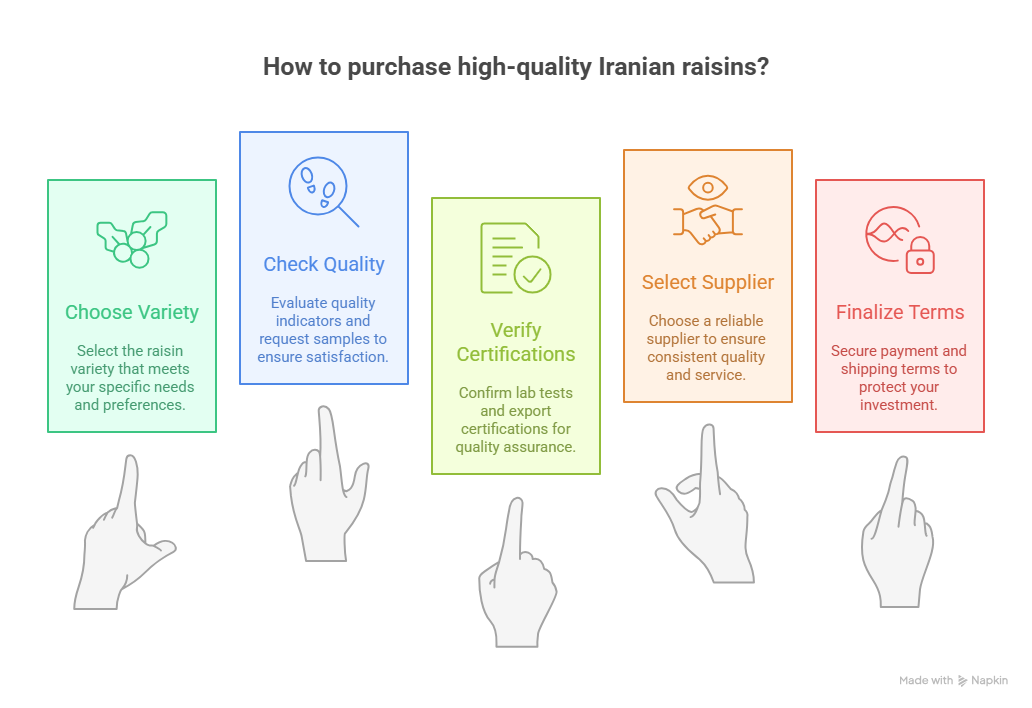
How can buyers purchase high-quality Iranian raisins?
Choose the right variety: Kashmari, Sultana, Golden
Check quality indicators and request samples
Verify lab tests and export certifications
Select a reliable Iranian supplier
Finalize secure payment and shipping terms
How and Where to Buy High-Quality Iranian Raisins (Kashmari, Sultana, Golden Raisins)
Buying high-quality Iranian raisins can feel complicated at first, especially when each variety carries its own character and commercial value. Importers often struggle with questions that seem simple yet shape their entire buying decision.
Which raisin variety meets their market demand? Where can they source authentic Iranian raisins? How can they verify quality before committing to a bulk order? This guide brings clarity by explaining the buying process, comparing varieties, and showing where reliable suppliers can be found.
Iran is one of the world’s leading raisin producers. According to global trade records, Iran exports more than 150,000 tons of raisins annually.
Kashmari, Sultana Dark Raisin, Sultana light Raisin and Golden raisins rank among the country’s most valuable agricultural exports due to their natural sweetness and stable supply chain. Understanding how these raisins are made and how buyers can source them creates a competitive advantage in international trade.
Table: Comparison of Iranian Raisin Types for Bulk Buyers
| Raisin Type | Appearance | Drying Method | Best Use Case | Price Level | Main Buyers |
|---|---|---|---|---|---|
| Kashmari (Long Green) | Long, green | Shade dried | Premium retail, gifting | High | UAE, China |
| Sultana | Brown-golden | Sun dried like Sun Dried Raisin | Bakery & confectionery | Medium | India, Russia |
| Golden Raisin | Bright yellow | Sulfur dried | Packaged snacks | Medium-high | Europe, Canada |
Understanding the Key Varieties of High-Quality Iranian Raisins
Each raisin variety serves a different purpose in the commercial market.
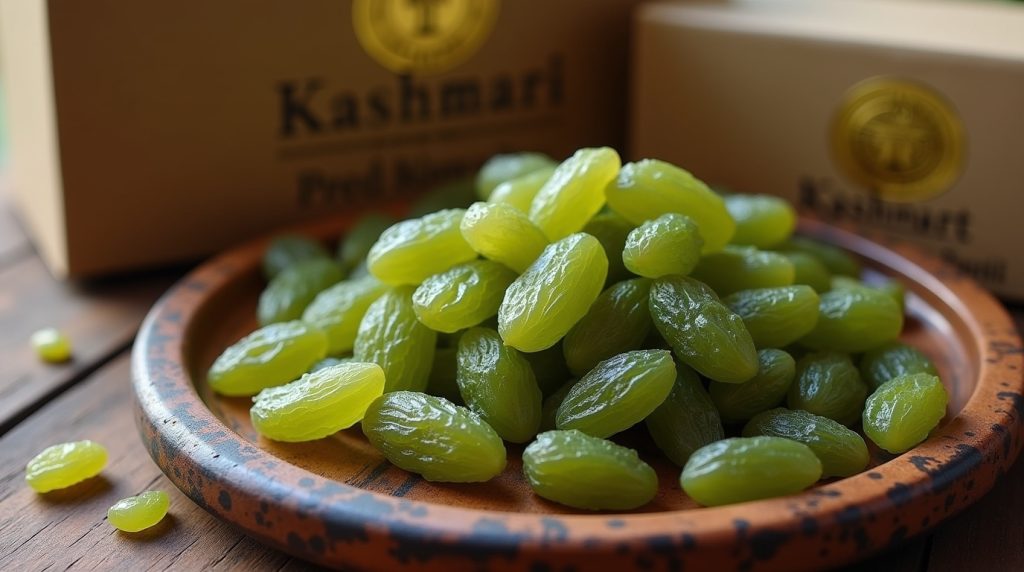
- Kashmari green raisins are long, green, and naturally dried, often favored by buyers who prioritize appearance and luxury-grade retail products.
- Sultana raisins come from seedless grapes and are widely used in bakery and confectionery industries because of their balanced sweetness and soft texture.
- Golden raisins owe their bright color to controlled sulfur exposure, making them ideal for premium packaging.
Knowing these distinctions helps importers decide which product aligns with consumer demand and target pricing in their region. This clarity is often the first step toward a confident purchase.
How to Evaluate and Buy High-Quality Iranian Raisins for Bulk Import
1. Examine the essential quality indicators
Color consistency, moisture level, size uniformity, and absence of residue determine the value of Iranian raisins. A moisture level of 12 to 16 percent is generally accepted for international shipments. Buyers should also review laboratory tests to ensure compliance with ochratoxin and pesticide standards.
2. Request product samples before confirming the order
Sampling allows buyers to verify freshness, texture, and overall appearance. Many reliable suppliers provide pre-shipment photos and videos, yet physical samples remain the best way to confirm grading.
3. Confirm certifications and export documentation
Reputable Iranian exporters supply certificates including ISO, HACCP, and phytosanitary reports. These documents ensure that the product meets the regulations set by major importing countries such as India, UAE, Germany, and Canada.
4. Choose secure payment and shipping terms
Most international buyers finalize their purchase using TT, LC, or partial advance payments. Shipping terms such as FOB or CIF affect price transparency and delivery responsibilities.
read more: Golden Raisin vs. Sultana: What’s the Real Difference?
Where to Buy Authentic Kashmari Sultana and Golden Raisins
Importers typically source premium Iranian raisins from three main channels. Direct purchases from established Iranian growers provide the best pricing, although planning logistics becomes essential. Certified exporters offer a more structured export process and ensure consistent quality. Some buyers prefer verified online B2B platforms, especially when comparing prices or negotiating smaller quantities.
What if a buyer seeks long-term supply stability? Choosing a supplier with cold-storage facilities and established export routes can reduce risk and guarantee year-round availability.
Conclusion
When purchasing high-quality Iranian raisins, understanding the varieties, confirming certifications, testing samples, and choosing the right supplier ensures a smooth buying experience. Importers who follow a structured process gain both confidence and long-term commercial stability.
FAQ
What is the best type of Iranian raisin for bulk import?
Kashmari raisins are preferred for luxury retail markets, while Sultana and Long Golden raisins suit bakery production and general retail due to their balanced price and flavor profile.
How can buyers verify authenticity when sourcing Iranian raisins?
Requesting laboratory tests, certifications, and physical samples is the most reliable method for confirming authenticity and grading.
What factors influence the price of Iranian raisins?
Seasonal yield, quality grade, moisture level, export documentation, packaging, and chosen shipping terms contribute directly to the final price.