

What is the difference between raisins and sultanas?
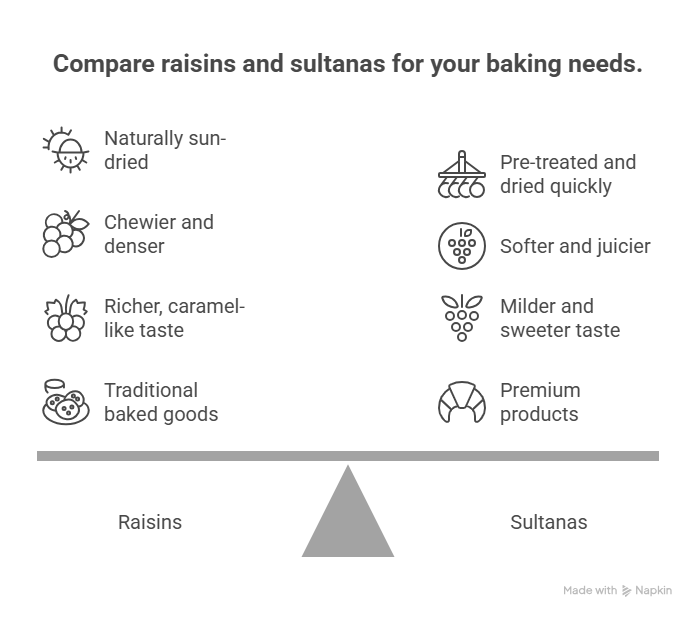
Processing: Raisins are naturally sun-dried, while sultanas are pre-treated and dried more quickly.
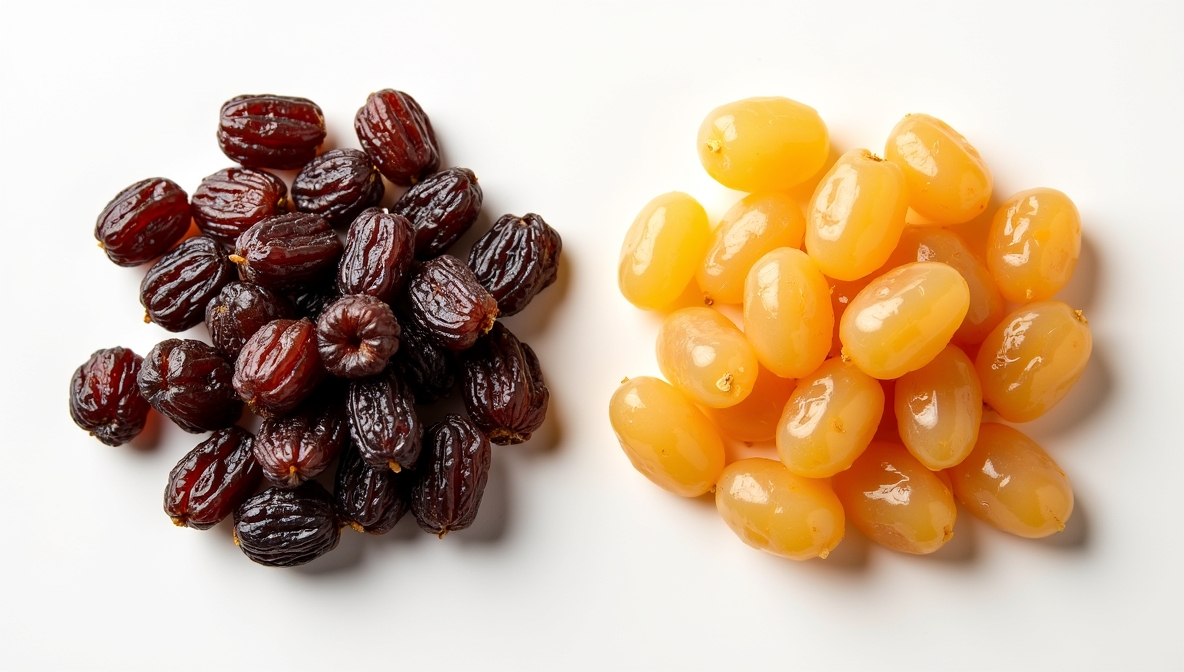
Color: Raisins are dark brown to black; sultanas are light golden.
Texture: Raisins are chewier and denser; sultanas are softer and juicier.
Flavor: Raisins have a richer, caramel-like taste; sultanas are milder and sweeter.
Use: Raisins suit traditional and dark baked goods; sultanas are preferred for light-colored and premium products.
Raisins and sultanas sit side by side on many ingredient lists, yet many buyers are not fully sure where the real differences lie. For importers, manufacturers, and traders, that uncertainty can affect specifications, pricing, and even consumer acceptance, especially when sourcing from established origins such as Iran, which is analysed in detail in the guide on Where to Buy Iranian Raisins. This guide explains how raisins and sultanas differ in origin, processing, colour, flavour, and usage so you can choose the right dried grape for each application with confidence.
Definitions and naming in different markets
In most international trade, raisins refers to dried grapes that are naturally dark in colour and often sun dried. They are usually produced from seedless varieties such as Thompson Seedless or related cultivars, similar to those used in traditional products like Sun Dried Raisin Thompson, which are widely recognised in global wholesale markets.
Sultanas are also dried seedless grapes, but they are typically treated before drying. They are often dipped in an alkaline or oil solution and may be exposed to sulphur dioxide to keep a lighter, golden colour and softer texture, a process commonly associated with Golden Raisin production in export-oriented supply chains.
In some English speaking markets, sultanas are called golden raisins, which adds to the confusion for buyers working across regions. This terminology becomes clearer when comparing dark and light sultana styles, such as Sultana Dark Brown Raisin versus lighter alternatives offered by the same origins.
Understanding this terminology is important when you compare product sheets from suppliers in Turkey, the United States, Iran, or Australia, particularly when reviewing European demand patterns discussed in the Europe Raisins Market Analysis: Trends, Demand, Prices and Key Importers.
Processing methods that create colour and texture differences
The main distinction between raisins and sultanas comes from processing rather than from plant genetics. Raisins are usually sun dried without intensive pre treatment, which leads to a darker, caramelised appearance and a chewier bite, as seen in traditional bulk categories such as Jumbo Raisin Mavis used in bakery and industrial applications.
Sultanas are generally pre treated and dried more quickly. The treatment speeds moisture loss and preserves a lighter colour, resulting in a softer texture similar to Sultana Light Brown Raisin Malayer, which is often selected for premium mixes.
Moisture content for both products typically falls in the range of 15 to 18 percent, which helps stabilise shelf life while keeping a pleasant chew. Quality standards often specify limits for defects, stalks, and sugar crystallisation for both types, including elongated varieties such as Green Long Raisin that require stricter grading.
Nutritional profile and functional performance
From a nutritional perspective, raisins and sultanas are very similar. Standard food composition tables report roughly 280 to 320 kilocalories per 100 grams, with high levels of natural sugars, some dietary fibre, and small but relevant amounts of potassium and iron. Any differences are usually due to processing details and grape variety, not to category alone.
Functionally, both ingredients provide sweetness, colour, and bite in bakery items, cereals, confectionery, and snack bars. Raisins bring a darker tone and more pronounced caramel flavour, while sultanas integrate more discreetly into light doughs, breakfast foods, and fruit mixes aimed at visual appeal.
Choosing between raisins and sultanas for industrial use
For bulk buyers, the choice often depends on how the final product should look, taste, and perform in processing lines. Dark raisins can support traditional recipes and robust flavours in breads and granola. Sultanas may be better for light cakes, premium trail mixes, and products where a bright golden colour signals quality to consumers.
Price can differ depending on origin, crop year, and treatment costs. Some seasons favour raisins on cost grounds, while in other years sultanas are more competitive. Long term contracts and origin diversification can help balance these shifts.
1. Define your product application
Clarify whether the main use is bakery, cereal, snack bar, chocolate coating, or retail packing. Each application has different expectations for size, texture, and visual impact.
2. Match appearance and flavour to consumer expectations
Decide whether a dark, robust fruit note suits your brand better than a light, golden accent. Consider how the dried grapes will interact with dough colour, coatings, and other inclusions.
3. Align sourcing and specifications with processing needs
Work with suppliers to set clear parameters on berry size, moisture level, oil treatment, sulphur content, and defect tolerances. This helps minimise waste and keeps production lines running smoothly.
FAQ – Raisins vs sultanas
Are raisins and sultanas made from different grapes?
They are usually produced from similar seedless grapes, but sultanas often come from carefully selected varieties that respond well to rapid drying and colour retention.
Why are sultanas lighter in colour than raisins?
Sultanas are commonly pre treated and sometimes exposed to sulphur dioxide before drying. This slows browning and keeps the berries golden and soft.
Can I substitute sultanas for raisins in manufacturing?
In many recipes you can, but you should test for colour, sweetness perception, and water absorption. Small trials help confirm that processing, texture, and visual appeal remain within target.
Which option is better for premium bakery products?
Golden sultanas are often preferred in light doughs and high end mixes, while dark raisins are well suited to traditional breads and robust granola blends.